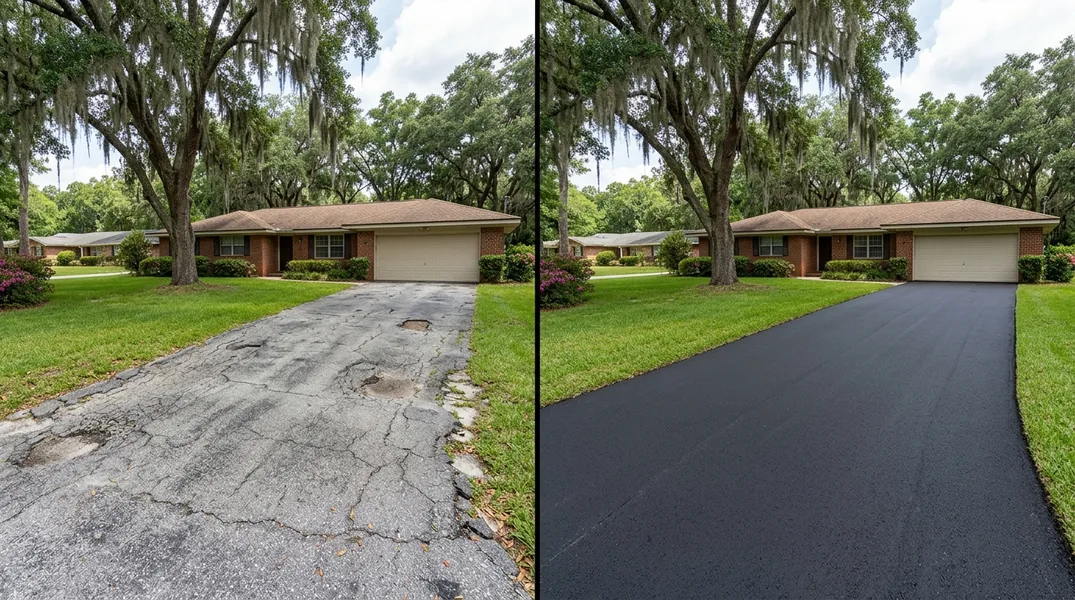
Understanding the Difference: Overlay vs. Full Replacement
When your driveway starts showing its age, you face a critical decision: should you invest in Asphalt Resurfacing & Overlay or bite the bullet with a complete replacement? This choice can mean the difference between a smart maintenance decision and throwing money at a problem that will resurface in a few years. Understanding what each option entails is the first step toward making the right call for your property.
An overlay, also called resurfacing, involves laying a new layer of asphalt directly over your existing driveway. This works when the base layer is still structurally sound, even if the surface is worn, faded, or showing minor cracks. A full replacement, on the other hand, removes the entire old driveway down to the subbase, addresses any underlying issues, and installs a brand-new surface from the ground up. The choice depends on the condition of your current driveway, your budget, and how long you plan to stay in your home.
Signs Your Gainesville Driveway Needs More Than Just an Overlay
Not every damaged driveway is a candidate for resurfacing. If your driveway is experiencing alligator cracking, you're looking at a more serious problem than surface wear. Alligator cracking appears as a web-like pattern of interconnected cracks, resembling the skin of an alligator, and signals that the base layer is failing. This type of damage typically indicates that the foundation beneath has shifted, become unstable, or is breaking down due to water infiltration and freeze-thaw cycles common in Florida's climate. When you see this pattern, an overlay might temporarily hide the problem, but it won't fix the underlying cause, and the cracks will eventually reappear through the new layer.
Other red flags that suggest full replacement over Asphalt Resurfacing & Overlay include severe potholes, extensive rutting or depression, a driveway that's more than 20 years old, or standing water that pools on the surface after rain. If your driveway has been patched multiple times or if the base is soft and spongy when you press on it, you're dealing with structural failure. In these cases, laying new asphalt over a compromised base is like putting a fresh coat of paint on a house with rotting walls. The investment won't last, and you'll end up spending more money in the long run.
When an Overlay Makes Sense: The Right Conditions
Overlays are an excellent choice when the existing asphalt base is still in good structural condition. If your driveway has minor surface cracks, fading, or oxidation but the base hasn't started to fail, resurfacing can extend its life by 7 to 10 years at a fraction of the cost of full replacement. Overlays are particularly popular in Gainesville for homeowners looking to refresh their property's curb appeal without a major investment. The new layer bonds to the old surface, creating a smooth, dark, attractive driveway that looks brand new.
Overlays also work well if you're planning to sell your home in the next five to seven years and want to improve its appearance without the disruption and expense of a full replacement. The process is faster, usually completed in a day or two, and causes minimal disruption to your daily life. However, it's important to note that overlays are not a permanent solution. Eventually, the base will age, and you'll face the replacement decision again. If you're planning to stay in your home long-term, a full replacement might be the wiser investment despite the higher upfront cost.
Asphalt Driveway Paving & Installation Cost in Gainesville: What to Budget
Understanding the financial side of this decision is crucial. Overlay costs typically range from $1.50 to $3.00 per square foot, depending on the condition of your existing driveway and any necessary prep work. A full replacement generally costs between $3.00 and $5.00 per square foot or more, depending on the size of your driveway, the complexity of the job, and site conditions. For a typical 2,000 square foot driveway, an overlay might cost $3,000 to $6,000, while a full replacement could run $6,000 to $10,000 or higher. These are estimates, and actual pricing depends on your specific situation.
While the upfront cost of an overlay is significantly lower, consider the long-term value. A full replacement, though more expensive initially, provides a durable, long-lasting solution that typically lasts 15 to 20 years with proper maintenance. An overlay, while cheaper now, will likely need replacement in 7 to 10 years, meaning you could end up spending more over time if you choose the cheaper option on a driveway that really needs full replacement. The smartest approach is to have a professional assess your driveway's condition and provide honest guidance on which option will serve you best. Gainesville Asphalt Paving can evaluate your driveway and help you understand the true cost-benefit of each approach. Call (352) 450-6164 to discuss your options with a specialist.
How to Assess Your Driveway: Signs of Structural Failure
Before deciding on overlay versus replacement, you need to understand the current state of your driveway's foundation. Start by examining the surface closely. Walk the entire driveway looking for patterns of cracking. Isolated cracks that run in straight lines or small spiderwebs in localized areas are usually surface issues that an overlay can handle. However, widespread alligator cracking that covers a significant portion of the driveway indicates base failure. Also check for areas where the asphalt feels soft or spongy, which suggests the base layer is breaking down and no longer providing proper support.
Look for evidence of water damage, including areas where water pools after rain or where the surface has become uneven. Depressions and ruts show that the base has shifted or settled unevenly. If you notice that cracks reappear shortly after Pothole Repair & Asphalt Patching or other repairs, that's a sign the underlying structure is unstable. Age matters too. If your driveway is 15 years or older and showing multiple signs of wear, full replacement is often the more prudent choice. When in doubt, consult with a professional who can perform a thorough evaluation and provide an honest assessment of whether your driveway can support an overlay or truly needs replacement.
Making Your Decision: A Long-Term Investment Perspective
The choice between overlay and replacement ultimately comes down to your specific situation, your budget, and your long-term plans. If your driveway's base is sound, you're on a budget, and you plan to move within five to seven years, an overlay is a sensible choice. It will improve your home's appearance and functionality without the major expense and disruption of full replacement. However, if your driveway is showing signs of structural failure, you plan to stay in your home for many years, or you want the peace of mind that comes with a long-lasting solution, full replacement is the better investment.
Don't let the lower price tag of an overlay tempt you into a decision that will cost you more money down the road. A professional evaluation is the only way to know for certain which option is right for your driveway. Gainesville Asphalt Paving has the expertise to assess your driveway's condition and recommend the solution that will give you the best value. Whether you need Asphalt Driveway Paving & Installation or resurfacing, we're here to help. Contact us today for a free estimate and let's determine the best path forward for your driveway. Call (352) 450-6164 to speak with one of our specialists and get started on restoring your driveway to its best condition.
Looking for a professional asphalt paving contractor in Gainesville? Gainesville Asphalt Paving responds fast for all your asphalt paving needs.
Get a Free Quote