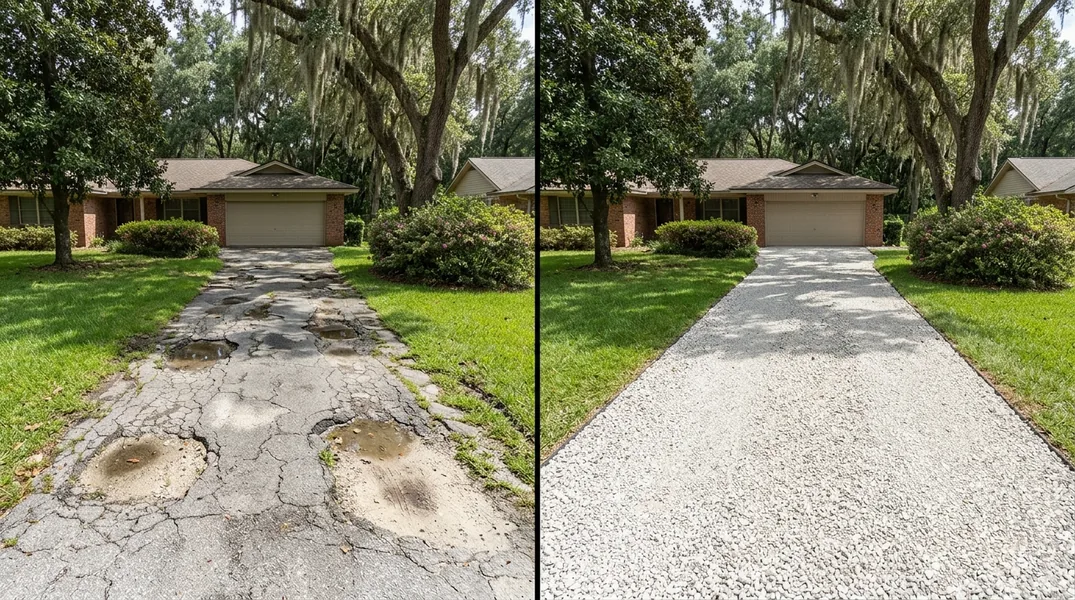
Why Driveway Drainage Matters in Gainesville
If you own a home in Gainesville, you've probably noticed how heavy rain can leave standing water on your driveway. This isn't just an eyesore. Poor driveway drainage solutions create serious structural problems that get worse every season. Water that pools on asphalt doesn't simply evaporate. It seeps into the base layers beneath your pavement, weakening the foundation and accelerating deterioration.
Gainesville's subtropical climate brings frequent afternoon thunderstorms, and our sandy soil composition makes drainage issues even more critical. When water penetrates asphalt, it destabilizes the subgrade, leading to cracks, potholes, and worst of all, sinkholes. A sinkhole isn't just a repair problem. It's a safety hazard and a costly emergency. Understanding proper drainage now can save you thousands in Driveway Repair costs down the road.
Understanding Water Pooling on Your Driveway
Water pooling on driveway surfaces happens when the asphalt lacks proper slope or when the surrounding grading directs runoff toward the pavement instead of away from it. Many homeowners think a little standing water is normal, but even shallow puddles that linger for hours indicate a drainage problem. The longer water sits, the more it penetrates micro-cracks and porous asphalt, especially in older driveways that have begun to oxidize.
The root causes vary. Sometimes the original installation didn't include adequate slope. Other times, soil erosion has changed the grading over years. Clogged gutters and downspouts can also direct roof runoff directly onto your driveway, overwhelming any existing drainage. In Gainesville, where sandy soil drains quickly in some areas but compacts poorly in others, the problem is compounded by inconsistent ground conditions. The solution isn't always obvious, which is why professional assessment matters.
French Drain Systems for Driveway Protection
A driveway french drain is one of the most effective solutions for managing subsurface water around your asphalt. This system consists of a perforated pipe buried in a gravel-filled trench along the edge or beneath your driveway. Water naturally migrates toward the drain, gets filtered through gravel, and flows away from your pavement through the pipe. The beauty of this approach is that it works passively, requiring no pumps or electricity, and it handles both surface runoff and groundwater seepage.
French drains work especially well in Gainesville because they address the region's water management challenges without requiring extensive excavation of your entire driveway. The drain can be installed along one or multiple sides, depending on your property's slope and water flow patterns. When combined with proper grading and a well-maintained asphalt surface, a french drain system can extend your driveway's lifespan by 10 to 15 years or more. Installation should be done by professionals who understand local soil conditions and can ensure the drain slopes correctly to an outlet.
Trench Drain Driveway Solutions for Heavy Water Flow
For properties with significant water runoff or steep slopes, a trench drain driveway system offers superior performance. Unlike french drains, which are buried and mostly invisible, trench drains use a linear channel system installed at the surface or just below grade. These channels have grates or covers and direct water away from your pavement much more aggressively. Trench drains are ideal if you have multiple downspouts, a large roof area, or if your driveway sits at a low point where neighboring properties shed water toward you.
The installation process involves cutting a trench along the driveway edge or across problem areas, laying a sloped channel system, and connecting it to a proper outlet such as a storm drain, creek, or designated drainage area. Trench drains handle high-volume water events better than french drains because they don't rely on soil permeability. In Gainesville's heavy rain seasons, this reliability is a real advantage. Many homeowners pair trench drains with Asphalt Driveway Paving & Installation projects to ensure both new pavement and proper drainage are in place from day one.
Sinkholes: Prevention and Early Warning Signs
Sinkholes are the worst-case outcome of poor drainage. They form when water erodes the soil beneath your driveway, creating a void that eventually collapses under the weight of the asphalt. In areas with sandy or limestone soil like Gainesville, sinkholes can develop surprisingly fast. You might notice a small depression or crack one week and a full crater the next. Prevention is far easier and cheaper than dealing with a sinkhole emergency.
Early warning signs include sudden appearance of large cracks, areas of the driveway that feel soft or bounce slightly when you drive over them, or unexpected settling on one side of the pavement. If you see water consistently pooling in the same spot despite dry weather, that's a red flag for subsurface erosion. The best prevention strategy combines proper drainage installation with regular inspection and maintenance. If you suspect a sinkhole is forming, contact a professional immediately. Continuing to drive over a weakened area can cause sudden collapse and create a dangerous situation. Gainesville Asphalt Paving can assess your driveway's condition and recommend whether drainage improvements, Asphalt Resurfacing & Overlay, or more extensive repairs are needed.
Designing a Complete Drainage Plan for Your Driveway
The best driveway drainage solution is custom-designed for your specific property. This means evaluating your lot's slope, soil type, existing water flow patterns, local rainfall intensity, and future development plans. A professional assessment will identify whether you need french drains, trench drains, improved grading, or a combination approach. Some properties benefit from simply re-sloping the driveway surface and regrading the surrounding soil. Others require underground systems to handle persistent groundwater.
Your drainage plan should also address roof runoff and gutter management. Downspouts should extend at least 6 to 10 feet away from your driveway, directing water to landscaped areas where it can infiltrate naturally. If your driveway is aging or showing signs of damage, this is the ideal time to integrate new drainage with Pothole Repair & Asphalt Patching or a full resurfacing project. Gainesville Asphalt Paving offers free estimates and can walk you through all available options. Call (352) 450-6164 to schedule a site evaluation, or visit our website at https://gainesville-asphalt-paving.com to request a free estimate.
Looking for a professional asphalt paving contractor in Gainesville? Gainesville Asphalt Paving responds fast for all your asphalt paving needs.
Get a Free Quote